 UPCOMING QCO ON TEXTILE GOODS BY MINISTRY OF TEXTILE


BIS ISI MARK CERTIFICATION FOR CONCRETE PRODUCTS
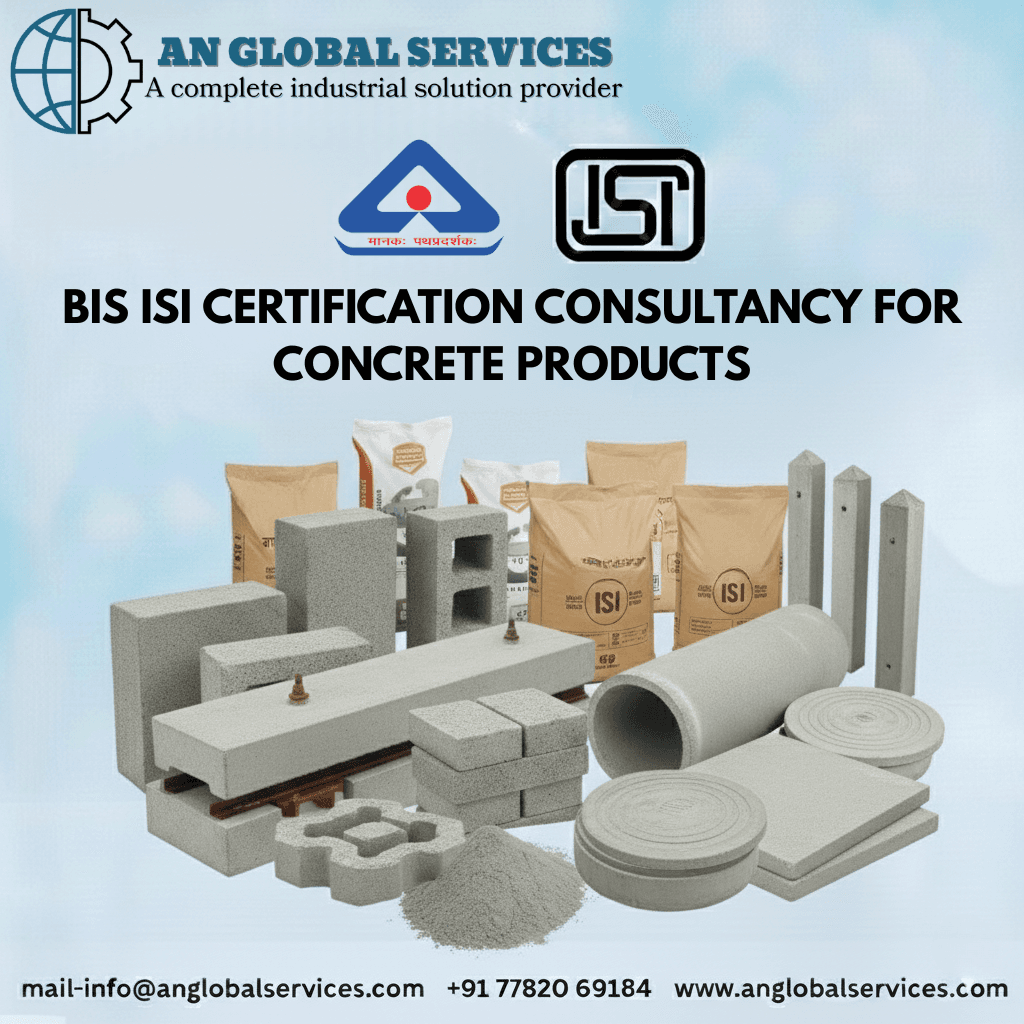
What is BIS ISI Mark Certification for Concrete Products?
BIS ISI Mark certification for concrete products is a mandatory quality compliance requirement enforced under various Quality Control Orders (QCOs) issued by the Government of India. It ensures that concrete products conform to prescribed Indian Standards related to strength, durability, load-bearing capacity, and structural safety before they are manufactured, supplied, or used in construction projects.
The ISI Mark signifies that concrete products have undergone conformity assessment, product testing, and factory inspection as per Bureau of Indian Standards (BIS) guidelines. BIS-certified concrete products are subject to continuous surveillance to ensure consistent quality and to prevent the use of substandard construction materials in public and private infrastructure.
Commonly regulated concrete products include cement concrete blocks, paver blocks, precast concrete pipes, RCC pipes, concrete railway sleepers, precast slabs, and other structural concrete components used in buildings, roads, drainage, and infrastructure projects. BIS ISI Mark certification applies to both Indian and foreign manufacturers, and non-compliance may result in rejection at project sites, penalties, or prohibition on use in regulated construction works.
Benefits of BIS ISI Mark Certification for Concrete Products
BIS ISI Mark certification is a mandatory quality and safety compliance requirement for various concrete products notified under Quality Control Orders (QCOs) issued by the Government of India. ISI certification ensures structural reliability, durability, and conformity with Indian Standards for use in construction and infrastructure projects.
1. Mandatory Compliance for Construction and Infrastructure Use
BIS ISI certification is compulsory for concrete products such as cement concrete blocks, paver blocks, RCC pipes, precast concrete pipes, and other notified items. Without ISI certification, such products cannot be supplied to government projects or regulated construction works.
2. Assured Strength, Durability, and Load-Bearing Performance
BIS-certified concrete products are tested for compressive strength, dimensional accuracy, water absorption, and durability. This ensures long service life and structural safety in buildings, roads, and drainage systems.
3. Acceptance in Government and Institutional Projects
Government departments, PSUs, urban development authorities, and infrastructure agencies prefer or mandate ISI-marked concrete products for public works, housing projects, highways, and utilities.
4. Competitive Advantage in Tenders and Large Projects
ISI Mark certification improves eligibility for government tenders and large construction contracts, giving manufacturers a competitive edge in regulated infrastructure and real estate markets.
5. Reduced Legal, Structural, and Project Risk
Compliance with BIS standards minimizes risks related to structural failure, project rejection, penalties, and legal liability arising from the use of substandard concrete products.
Documents Required for BIS ISI Certification for Concrete Products
To obtain BIS ISI Mark certification for concrete products, manufacturers must submit technical, production, and quality-related documents to demonstrate conformity with applicable Indian Standards.
1. Business & Plant Documents
- Company incorporation or registration certificate.
- Manufacturing unit address proof.
- GST registration and PAN.
- Trade mark certificate (if applicable).
2. Concrete Product Details
- Product description and dimensions.
- Applicable Indian Standard (IS Code).
- Concrete mix design and raw material details.
- Manufacturing process flow chart.
3. Manufacturing & Testing Infrastructure
- Batching plant and molding machinery details.
- In-house testing equipment for concrete testing.
- Calibration certificates.
- Qualified quality control personnel details.
4. Application & Test Reports
- Online BIS application (Form V).
- Authorization letter (if applicable).
- Product test reports from BIS-recognized laboratory.
Process to Get BIS ISI Mark Certification for Concrete Products
The BIS ISI certification process for concrete products follows a structured procedure involving application submission, factory inspection, and product testing. The timeline typically ranges from 60 to 90 days for domestic manufacturers.
- Identify Applicable IS Code: Select the relevant Indian Standard for the concrete product.
- Online Application Submission: File the application on the BIS Manak Online portal with required documents.
- Factory Inspection: BIS officers inspect the manufacturing process, plant setup, and testing facilities.
- Sample Testing: Concrete samples are tested for strength, durability, and conformity with IS requirements.
- Grant of ISI License: Upon successful compliance, BIS issues the Certification Marks License (CM/L).
CONCRETE PRODUCTS UNDER BIS ISI CERTIFICATION
| Product | Indian Standard | Product | Indian Standard |
|---|---|---|---|
| Precast Concrete Pipes | IS 458:2021 | Glazed Stoneware Pipes | IS 651 |
| Paver Blocks | IS 15658 | Precast Concrete Pipes | IS 458 |
| RCC Hume Pipes | IS 458 | Concrete Kerb Stones | IS 15658 |
| Precast Concrete Slabs | As per applicable IS | Concrete Railway Sleepers | As per RDSO / IS |
IS 458:2021
IS 651
IS 15658
IS 458
IS 458
IS 15658
As per applicable IS
As per RDSO / IS
BIS ISI Certification for Concrete Products – FAQs
BIS ISI Mark certification for concrete products is a mandatory quality compliance approval issued by the Bureau of Indian Standards. It confirms that concrete products meet applicable Indian Standards related to strength, durability, dimensions, and structural safety.
No, BIS ISI certification is mandatory only for concrete products notified under Quality Control Orders (QCOs) issued by the Government of India. Products not covered under QCOs may not require ISI certification.
Common concrete products requiring ISI certification include cement concrete blocks, solid concrete blocks, paver blocks, precast concrete pipes, RCC pipes, kerb stones, and other precast concrete components used in construction and infrastructure projects.
Only manufacturers are eligible to apply for BIS ISI certification. Traders, suppliers, or contractors cannot apply unless they own and operate the concrete manufacturing plant. Foreign manufacturers must apply under the BIS FMCS scheme.
For domestic manufacturers, the BIS ISI certification process generally takes 60 to 90 days, depending on document readiness, factory inspection scheduling, and laboratory testing of concrete samples.
BIS ISI licenses are usually granted for one year and can be renewed annually, subject to ongoing compliance with BIS surveillance, testing requirements, and payment of applicable fees.
An ISI license is factory-specific and product-specific. Multiple concrete products may be covered under one license only if they fall under the same Indian Standard and are manufactured at the same plant location.
Supplying or using BIS-notified concrete products without ISI certification can result in rejection at construction sites, penalties, project blacklisting, cancellation of government contracts, and legal action under the BIS Act, 2016.

