UPCOMING QCO ON TEXTILE GOODS BY MINISTRY OF TEXTILE



EPR REGISTRATION SERVICES
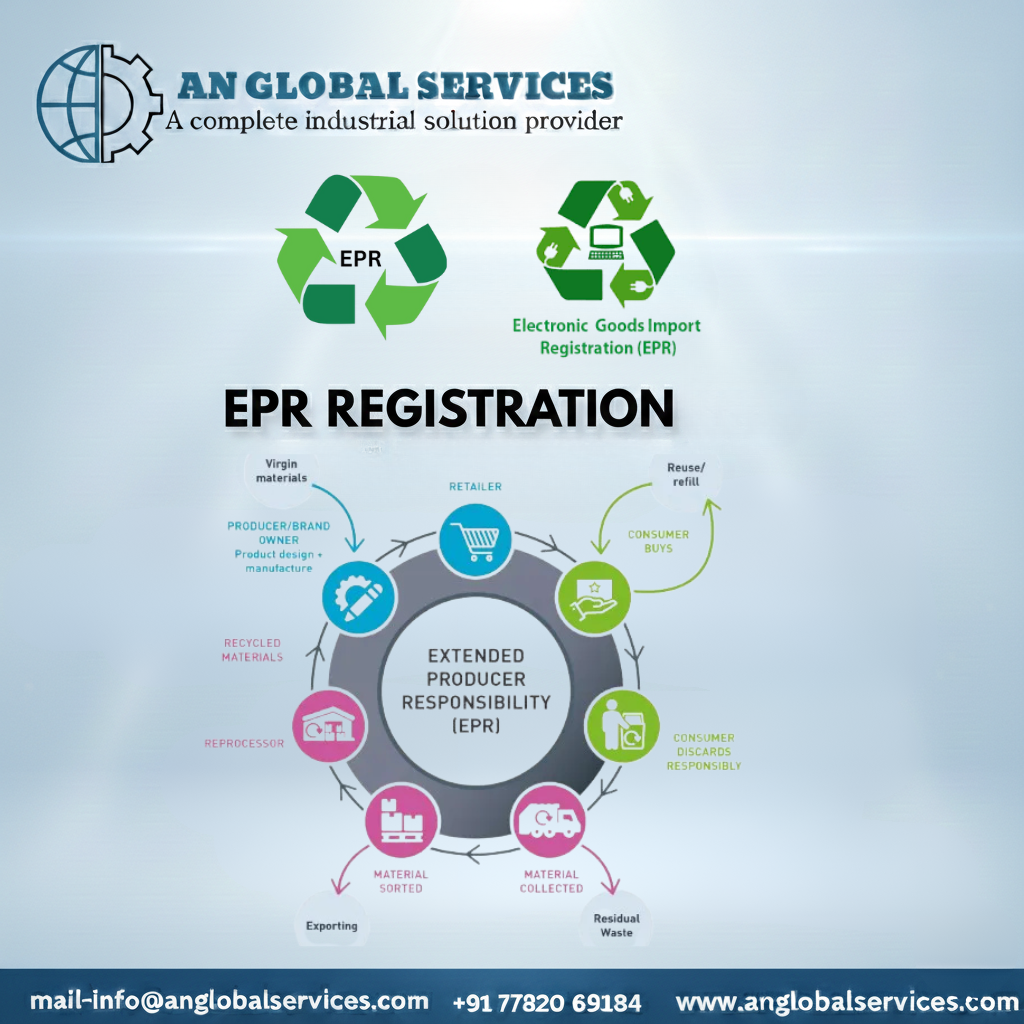
What is EPR Registration?
EPR registration is an official authorization that reflects a business’s commitment to environmental sustainability. Under this system, manufacturers, importers, and brand owners are made responsible for the collection, recycling, and environmentally sound disposal of waste generated from their products at the end of their lifecycle. EPR registration is mandatory for PIBOs operating in India and is obtained by applying through the CPCB EPR portal.
Products commonly covered under EPR compliance include electrical and electronic equipment (EEE) regulated under the E-Waste (Management) Rules, 2016; plastic products and packaging materials regulated under the Plastic Waste Management Rules, 2016; and batteries and accumulators governed by applicable battery management regulations.
With proper documentation, recycling arrangements, and compliance planning, EPR registration helps businesses meet their legal obligations while contributing to sustainable waste management practices. AN Global Services provides end-to-end assistance to help clients obtain EPR registration smoothly and without compliance stress.
Products Covered Under EPR Compliance
Electrical & Electronic Equipment (EEE)
Products such as electronic and electrical equipment are covered under the E-Waste (Management) Rules, 2016. Producers, importers, and brand owners must ensure proper collection and recycling of e-waste generated after product use.
Plastic Products & Packaging
Plastic packaging and plastic-based products fall under the Plastic Waste Management Rules, 2016. EPR registration is mandatory to manage plastic waste responsibly and meet recycling targets.
Batteries & Accumulators
Batteries and accumulators are regulated under the Batteries (Management and Handling) Rules, 2001. Businesses must ensure safe collection, recycling, and disposal of used batteries.
Packaging Materials
Packaging materials, especially plastic-based packaging, are regulated under the Plastic Waste Management Rules, 2016 and related environmental regulations, requiring EPR authorization from CPCB.
Benefits of EPR Registration Online in India
EPR Registration (Extended Producer Responsibility) is a mandatory compliance framework in India that ensures responsible management of plastic packaging waste. By registering under EPR, producers, importers, and brand owners become accountable for the collection, recycling, reuse, or environmentally safe disposal of post-consumer plastic waste. Apart from regulatory compliance, EPR registration delivers long-term environmental, financial, and reputational benefits for businesses.
1. Effective Waste Management System
EPR registration establishes a structured mechanism for the collection, segregation, recycling, and safe disposal of plastic packaging waste. It ensures that waste is handled responsibly through authorized recyclers and processors, significantly reducing environmental pollution and landfill burden.
2. Optimized Cost Management
By adopting planned waste management strategies under EPR compliance, organizations can optimize operational costs related to waste handling. Eco-friendly product design and reduced material usage further help businesses lower long-term recycling and disposal expenses.
3. Enhanced Brand Value and Market Reputation
EPR authorization strengthens corporate goodwill by demonstrating environmental responsibility. Modern consumers and business partners prefer brands that actively contribute to sustainability, improving customer trust, brand loyalty, and overall market perception.
4. Environment-Friendly Business Operations
Compliance with EPR regulations directly supports pollution control and environmental conservation. Responsible plastic waste processing minimizes soil, air, and water contamination, helping businesses align with India’s sustainability and climate action goals.
5. Reduced Burden on Taxpayers
EPR registration shifts the responsibility of waste management from public authorities to producers and brand owners. This reduces dependency on taxpayer-funded waste systems while ensuring efficient and accountable waste processing by the concerned organizations.
6. Promotes Sustainable Development
EPR registration encourages sustainable product design, efficient resource utilization, and reduced waste generation. By promoting recycling and reuse, it supports long-term conservation of natural resources and helps businesses actively contribute to a circular economy.
Documents Required for EPR Registration in India
To obtain an EPR Registration certificate in India, producers, importers, and brand owners are required to submit specific business, compliance, and waste management related documents. These documents help regulatory authorities such as CPCB and SPCB verify legal authorization, waste handling capacity, and implementation readiness under E-Waste and Plastic Waste Management Rules.
1. Application & Authorization Documents
- Duly filled and signed EPR application form.
- Legal authorization for manufacture, import, sale, or distribution.
- Details of authorised person with identity proof.
- Copy of PAN card.
- Certificate of Incorporation.
2. Business & Address Proof
- Registered business address proof.
- GST registration certificate.
- Import Export (IE) Code verification (if applicable).
- Contact details of company representatives.
3. EPR Plan & Waste Management Details
- Detailed EPR plan to achieve CPCB/SPCB targets.
- Estimated quantity of e-waste or plastic waste generation.
- Recycler information and processing capacity details.
- Budget allocated for Extended Producer Responsibility.
4. Agreements & MoUs
- Agreement or MoU with authorised recyclers or waste processors.
- MoU for authorised transportation of waste.
- MoU with authorised laboratories for RoHS or compliance testing.
- Agreement with CPCB / SPCB / UT Administration (if applicable).
5. Product & Compliance Documents
- Detailed product information.
- BIS license copy (if applicable).
- Certificates issued by Municipality or Local Authorities.
- Awareness initiative details for waste collection.
6. Additional Regulatory Documents
- Estimates for e-waste or plastic waste management.
- Certificates from authorised recyclers.
- Any other documents required by CPCB or SPCB.
Rules, Acts, and Regulations for EPR Registration Online in India
EPR Registration in India is governed by a comprehensive legal framework formulated to prevent environmental pollution and ensure scientific management of plastic and electronic waste. The following Acts, Rules, and Guidelines form the statutory foundation for Extended Producer Responsibility compliance in India.
- The Environment (Protection) Act, 1986:This Act empowers the Central Government to take necessary measures to prevent, control, and abate environmental pollution and to protect and improve environmental quality. All EPR-related regulations derive their legal authority from this umbrella legislation.
- The E-Waste (Management) Rules, 2016:These rules regulate the generation, collection, transportation, storage, segregation, dismantling, refurbishment, recycling, and disposal of electronic waste in India while introducing Extended Producer Responsibility obligations for e-waste.
- Stakeholder Responsibilities under E-Waste Rules:The E-Waste (Management) Rules, 2016 clearly define the roles and responsibilities of producers, consumers, bulk consumers, collection centres, dealers, e-retailers, dismantlers, refurbishers, recyclers, and Producer Responsibility Organizations (PROs).
- The Plastic Waste Management Rules, 2016:These rules govern the generation, storage, collection, transportation, segregation, processing, recycling, and disposal of plastic waste in India and make EPR registration mandatory for plastic packaging waste.
- Stakeholder Responsibilities under Plastic Waste Rules:The Plastic Waste Management Rules, 2016 outline the responsibilities of producers, importers, brand owners, recyclers, waste pickers, consumers, local bodies, and gram panchayats for effective plastic waste management.
- CPCB Guidelines for Implementation of E-Waste Rules:Issued by the Central Pollution Control Board (CPCB), these guidelines provide clarity on EPR plans, documentation, collection mechanisms, reporting, testing, record keeping, labelling, capacity building, and compliance monitoring under the E-Waste (Management) Rules, 2016.
- CPCB Guidelines on Extended Producer Responsibility for Plastic Packaging:These guidelines explain EPR targets, collection mechanisms, plastic credits, channelization, documentation, reporting, verification, and record keeping to ensure effective implementation of plastic waste management obligations.
Compliance Note: Entities registered under EPR must comply with the applicable Acts, Rules, and CPCB guidelines on a continuous basis. Non-compliance or inaccurate reporting may result in penalties, suspension, or cancellation of EPR authorization.
Frequently Asked Questions (FAQs) on EPR Registration in India
What is EPR Registration in India?
EPR (Extended Producer Responsibility) Registration is a mandatory environmental compliance requirement under which producers, importers, and brand owners are responsible for the collection, recycling, and environmentally safe disposal of waste generated from their products.
Who is required to obtain EPR Registration?
Producers, Importers, Brand Owners (PIBOs), and Plastic Waste Processors dealing with plastic packaging, e-waste, batteries, tyres, or used oil must obtain EPR registration before placing their products in the Indian market.
Is EPR Registration mandatory in India?
Yes, EPR registration is mandatory under applicable waste management rules. Operating without valid EPR authorization may result in penalties, business restrictions, or cancellation of approvals by regulatory authorities.
How long does it take to get EPR Registration?
The processing time for EPR registration generally ranges from 10 to 20 working days, depending on document completeness, application accuracy, and authority scrutiny by CPCB or SPCB.
What is the validity period of EPR Registration?
EPR Registration is typically granted for a specific validity period as prescribed by CPCB. Businesses must comply with annual return filing, target fulfillment, and renewal requirements to maintain validity.
Can a business apply for multiple EPR categories?
Yes, if a business deals with multiple waste streams such as plastic packaging, e-waste, batteries, or tyres, it must obtain separate EPR authorization for each applicable category.
What happens if EPR compliance targets are not met?
Failure to meet EPR targets or submit accurate returns may result in environmental compensation, penalties, suspension, or cancellation of EPR authorization by the concerned authority.
Is EPR Registration applicable to foreign companies?
Yes, foreign manufacturers and importers supplying products to the Indian market are required to obtain EPR registration and comply with Indian waste management regulations.