UPCOMING QCO ON TEXTILE GOODS BY MINISTRY OF TEXTILE


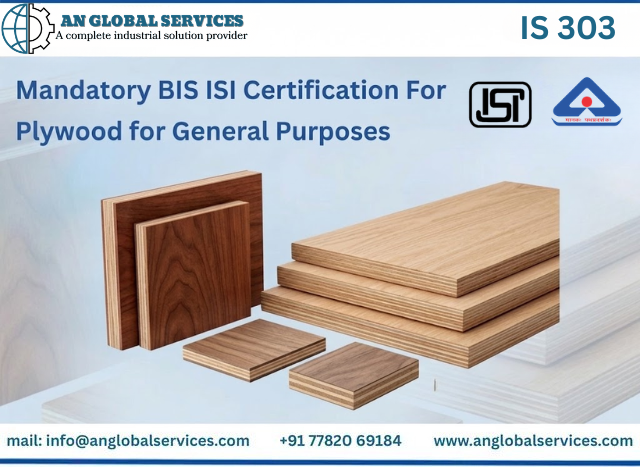
BIS ISI Certification for Plywood for General Purposes (IS 303:1989)
Plywood for general purposes is widely used in furniture manufacturing, interior construction, packaging, and structural applications. Since plywood is commonly used in residential and commercial environments, ensuring consistent strength, durability, and bonding quality is essential for safety and long-term performance.
BIS ISI certification for Plywood for General Purposes is governed by Indian Standard IS 303:1989. The standard specifies requirements relating to raw materials, veneer thickness, bonding strength, dimensional accuracy, grading of surfaces, and overall product performance.
BIS ISI Mark certification confirms that plywood products comply with prescribed Indian quality standards and can be legally manufactured, sold, or imported in India. Certified products demonstrate reliability, durability, and adherence to national safety requirements.
IS 303 – Key Quality Requirements for Plywood for General Purposes
- (i) Use of properly seasoned timber veneers
- (ii) Adhesive bonding strength for MR or BWR grade plywood
- (iii) Control of veneer thickness and grain direction
- (iv) Permissible defects and grading of surfaces (AA, AB, BB)
- (v) Dimensional tolerances and panel thickness accuracy
- (vi) Proper workmanship, finishing, and surface quality
- (vii) Resistance to moisture and environmental conditions
- (viii) Mandatory marking, identification, and ISI Mark labeling
Overview of ISI Mark Certification for Plywood for General Purposes (IS 303:1989)
IS 303:1989 specifies requirements for plywood intended for general applications including furniture production, interior construction, partitions, cabinets, and packaging structures. The standard defines material quality, veneer grading, adhesive bonding performance, and dimensional specifications.
Plywood products are classified based on bonding strength and surface quality. Moisture Resistant (MR) grade plywood is suitable for interior applications, while Boiling Water Resistant (BWR) grade plywood provides improved resistance to moisture exposure.
BIS ISI certification ensures that plywood manufacturers maintain consistent production standards, quality control systems, and testing procedures to deliver reliable products for the Indian construction and furniture industry.
Process Required for BIS ISI Mark Certification for Plywood for General Purposes (IS 303:1989)
To obtain BIS ISI certification for Plywood for General Purposes, manufacturers must follow the BIS Product Certification Scheme (Scheme-I). The certification process verifies manufacturing capability, product quality, testing infrastructure, and compliance with the Indian Standard.
Estimated Timeline: BIS ISI certification generally takes around 30 to 45 days for Indian manufacturers subject to successful inspection, testing, and documentation verification. The timeline may vary depending on inspection and test results.
Step-by-Step Certification Process
- Application Submission: Submit an application on the BIS Manak Online portal with product details, manufacturing unit information, and relevant documentation.
- Factory Evaluation: BIS officials review manufacturing processes, raw materials, quality control measures, and testing facilities at the production unit.
- Product Sample Testing: Samples are tested in BIS-recognized laboratories to verify compliance with IS 303 requirements.
- Compliance Review: BIS evaluates test results, inspection findings, and production control systems.
- Grant of BIS License: After successful verification, BIS grants the Certification Marks License (CM/L), allowing the manufacturer to use the ISI Mark on certified plywood products.
Requirements to Obtain BIS License for Plywood for General Purposes (IS 303:1989)
- Compliance of plywood products with specifications related to materials, veneer construction, bonding strength, and performance requirements defined under IS 303:1989.
- Manufacturing of plywood using properly seasoned timber veneers and approved adhesive systems suitable for MR (Moisture Resistant) or BWR (Boiling Water Resistant) grade bonding.
- Availability of in-house or approved testing facilities for verifying parameters such as moisture content, bending strength, adhesive bonding performance, and dimensional tolerances.
- Appointment of qualified quality control personnel responsible for inspection, testing, and maintaining compliance with the Indian Standard.
- Implementation of the Scheme of Inspection and Testing (SIT) and adherence to BIS Product Certification Scheme-I requirements for plywood products.
To obtain BIS ISI certification for Plywood for General Purposes under Product Certification Scheme-I, manufacturers must submit documentation that broadly falls under the following categories:
- Administrative Details: Business registration, manufacturing unit address proof, GST registration, and statutory approvals.
- Technical Details: Product specifications, plywood construction details, veneer thickness information, adhesive type, grading classification, and compliance declaration as per IS 303:1989.
- Quality Control Personnel Details: Qualification and responsibilities of personnel responsible for testing and quality assurance.
- Commercial Details: Brand name, trademark ownership details (if applicable), and authorization documents.
Cost of BIS ISI Certification for Plywood for General Purposes (IS 303:1989)
The following are indicative statutory charges involved in obtaining BIS ISI certification for Plywood for General Purposes under Product Certification Scheme-I. Government fees are payable directly to BIS.
| S. No. | Particular | Amount (INR) | Remarks |
|---|---|---|---|
| 1 | Application Fee | ₹1,000 | Payable to BIS |
| 2 | Inspection / Audit Fee | ₹7,000 | Payable to BIS |
| 3 | Product Testing Fee | As applicable | Depends on laboratory testing requirements |
| 4 | Marking Fee | As per BIS norms | Based on annual production |
Note: Fees are indicative and subject to revision by BIS. Applicants should verify the latest fee structure from the official BIS portal.
Benefits of Getting ISI Mark Certification for Plywood for General Purposes (IS 303:1989)
BIS ISI certification for plywood ensures that products meet Indian quality, durability, and safety standards. Certified plywood provides assurance of consistent performance and reliability in furniture and construction applications.
1. Mandatory Regulatory Compliance
Ensures compliance with Quality Control Orders applicable to plywood products in India.
2. Assured Product Quality
Certified plywood undergoes testing for bonding strength, moisture resistance, and structural performance.
3. Improved Market Acceptance
ISI marked plywood is widely accepted in construction projects, furniture manufacturing, and commercial procurement.
4. Consumer Confidence
The ISI Mark indicates that the product complies with national standards for safety and durability.
5. Competitive Business Advantage
BIS certified plywood gains preference in regulated markets and large infrastructure or furniture procurement projects.
Frequently Asked Questions (FAQs) – BIS ISI Certification for Plywood for General Purposes (IS 303:1989)
1. Is BIS ISI certification mandatory for plywood for general purposes?
Yes. Plywood for general purposes must comply with BIS certification requirements under the applicable Quality Control Order before it can be manufactured or sold in India.
2. Which Indian Standard applies to plywood for general purposes?
Plywood for general purposes is governed by Indian Standard IS 303:1989.
3. What grades are covered under IS 303:1989?
The standard covers Moisture Resistant (MR) and Boiling Water Resistant (BWR) grades depending on the bonding strength of adhesives.
4. What tests are conducted for plywood under IS 303?
Testing includes moisture content analysis, water resistance testing, static bending strength testing, adhesive bond verification, and dimensional tolerance checks.
5. What happens if non-ISI certified plywood is sold?
Selling plywood without required BIS ISI certification may lead to penalties, product seizure, and legal action under the BIS Act, 2016.