 UPCOMING QCO ON TEXTILE GOODS BY MINISTRY OF TEXTILE


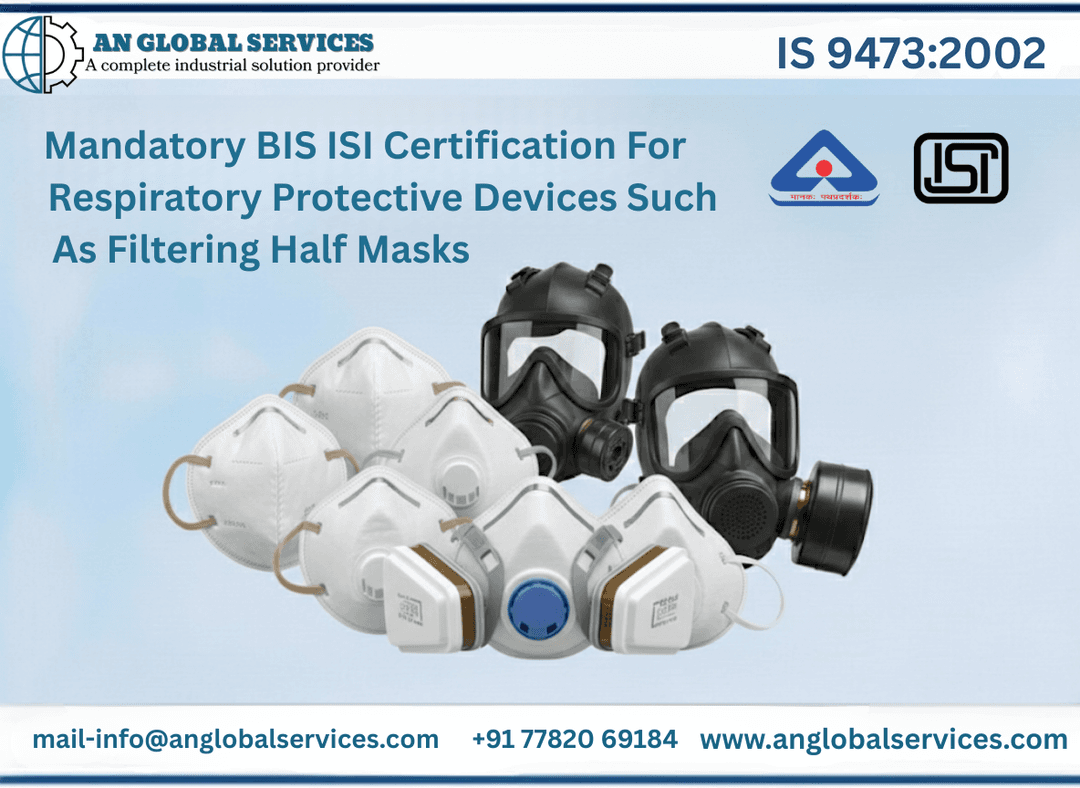
BIS ISI Certification for Respiratory Protective Devices – Filtering Half Masks (IS 9473)
Respiratory Protective Devices such as filtering half masks are critical personal protective equipment (PPE) used to protect workers from harmful dust, fumes, mists, and aerosols in industrial and occupational environments. In India, BIS ISI certification is mandatory for these devices to ensure reliable protection, safety, and performance.
BIS certification for Respiratory Protective Devices is governed by Indian Standard IS 9473. This standard specifies requirements related to design, filtration efficiency, breathing resistance, leakage, and overall performance of filtering half masks.
BIS ISI Mark certification under IS 9473 allows manufacturers to legally manufacture and supply respiratory protective devices in India and builds trust among industries, safety officers, and regulatory authorities.
IS 9473 – Key Quality & Performance Requirements for Respiratory Protective Devices
- (i) Design suitable for filtering half mask respiratory protection
- (ii) Adequate filtration efficiency against particulate matter
- (iii) Controlled breathing resistance for user comfort
- (iv) Leakage limits to ensure effective face seal
- (v) Mechanical strength and durability of mask body
- (vi) Adjustable nose clip and secure head harness system
- (vii) Use of non-toxic, skin-safe materials
- (viii) Mandatory marking, batch identification, and ISI Mark
Overview of ISI Mark Certification for Respiratory Protective Devices (IS 9473)
IS 9473 specifies requirements for respiratory protective devices such as filtering half masks used to protect against harmful particulates in industries including construction, mining, manufacturing, pharmaceuticals, and chemical processing.
The standard defines performance parameters including filtration efficiency, breathing resistance, inward leakage, and mechanical robustness to ensure effective respiratory protection in hazardous environments.
BIS grants ISI Mark certification for respiratory protective devices only after successful factory inspection, verification of quality control systems, and testing of samples in BIS-recognized laboratories. Certified products are authorized to carry the ISI Mark, confirming conformity with Indian Standards.
Process Required for BIS ISI Mark Certification for Respiratory Protective Devices (IS 9473)
To obtain the BIS ISI Mark for Respiratory Protective Devices such as filtering half masks under Indian Standard IS 9473, manufacturers must comply with the BIS Product Certification Scheme (Scheme-I). This ensures that respiratory devices meet mandatory safety and performance requirements before being manufactured or supplied in India.
Estimated Timeline: BIS ISI certification for respiratory protective devices generally takes around 30–45 days for Indian manufacturers
Step-by-Step Certification Process
- Application Submission: Apply via the Manak Online portal with product details, IS 9473 reference, factory address, manufacturing process, and QC setup.
- Testing Readiness: Ensure facilities for filtration efficiency, breathing resistance, inward leakage, and mechanical strength testing.
- Factory Inspection: BIS officers verify production controls, raw materials, testing equipment, and SIT compliance.
- Sample Testing: Samples are tested at BIS-recognized laboratories as per IS 9473.
- Grant of BIS License: Upon compliance, BIS grants the Certification Marks License (CM/L) permitting ISI Mark usage.
Requirements to Obtain BIS License for Respiratory Protective Devices (Filtering Half Masks) – IS 9473
- Compliance of respiratory protective devices with design, performance, and safety requirements specified under IS 9473.
- Use of non-toxic, skin-safe materials suitable for prolonged respiratory use in industrial environments.
- Availability of testing facilities for filtration efficiency, breathing resistance, inward leakage, mechanical strength, and visual inspection.
- Appointment of qualified quality control personnel to ensure consistent production conformity and product reliability.
- Strict adherence to the Scheme of Inspection and Testing (SIT) and BIS ISI certification guidelines applicable to respiratory protective devices.
To obtain BIS ISI certification for Respiratory Protective Devices under Product Certification Scheme-I, manufacturers are required to submit documents broadly classified into the following categories:
- Administrative Details: Business registration documents, factory address proof, GST registration, and statutory approvals.
- Technical Details: Product specifications, mask type, filtration media details, performance parameters, and compliance declaration as per IS 9473.
- Quality Control Personnel Details: Qualifications, experience, and responsibilities of personnel managing quality assurance and testing.
- Commercial Details: Brand name, trademark ownership (if applicable), and authorization documents.
Cost of BIS ISI Certification for Respiratory Protective Devices (IS 9473)
The following are indicative statutory charges involved in obtaining BIS ISI certification for Respiratory Protective Devices under Product Certification Scheme-I. All government fees are payable directly to the Bureau of Indian Standards (BIS).
| S. No. | Particular | Amount (INR) | Remarks |
|---|---|---|---|
| 1 | Application Fee | ₹1,000 | Payable to BIS |
| 2 | Inspection / Audit Fee | ₹7,000 | Payable to BIS |
| 3 | Product Testing Fee | As applicable | Depends on mask class & laboratory |
| 4 | Marking Fee | As per BIS norms | Based on annual production |
Important Note: Product testing as per IS 9473 is a critical stage in the BIS ISI certification process. BIS may conduct a factory pre-assessment to evaluate readiness prior to inspection. Charges mentioned above are indicative and may vary depending on filtration class and testing scope.
Benefits of Getting ISI Mark Certification for Respiratory Protective Devices (IS 9473)
Obtaining the ISI Mark for Respiratory Protective Devices such as filtering half masks under Indian Standard IS 9473 offers essential regulatory, commercial, and safety advantages. ISI certification confirms that respiratory devices meet Indian requirements for filtration efficiency, breathing resistance, leakage control, and durability.
1. Mandatory Legal Compliance
Respiratory protective devices are regulated safety products in India. ISI Mark certification under IS 9473 is mandatory for lawful manufacturing, sale, or supply.
2. Acceptance in Industrial & Occupational Safety Applications
ISI-certified filtering half masks are widely accepted in construction, mining, manufacturing, chemical plants, and hazardous work environments.
3. Proven Protection & Performance
Certified devices are tested for filtration efficiency, breathing resistance, inward leakage, and structural integrity, ensuring reliable respiratory protection.
4. Enhanced Brand Credibility & Market Trust
The ISI Mark builds confidence among safety officers, employers, and regulatory authorities, confirming compliance with national safety standards.
5. Competitive Advantage in Safety Equipment Market
ISI-certified respiratory protective devices gain preference in tenders, safety procurement contracts, and regulated industrial markets.
Frequently Asked Questions (FAQs) – BIS ISI Certification for Respiratory Protective Devices (IS 9473)
1. Is BIS ISI certification mandatory for filtering half masks?
Yes. Filtering half masks and respiratory protective devices must comply with Indian Standard IS 9473. BIS ISI Mark certification is mandatory as per applicable Quality Control Orders (QCOs) issued by the Government of India before manufacturing or supplying them in India.
2. Which Indian Standard governs respiratory protective devices?
Respiratory protective devices such as filtering half masks are governed by Indian Standard IS 9473.
3. What are the key performance requirements under IS 9473?
Key requirements include filtration efficiency, breathing resistance, inward leakage limits, mechanical strength, and proper face fit.
4. What tests are conducted under IS 9473?
Testing includes filtration efficiency, breathing resistance, inward leakage, mechanical strength, and visual inspection.
5. What happens if non-ISI certified respiratory masks are supplied?
Supplying non-ISI certified respiratory protective devices may lead to penalties, product seizure, rejection in safety audits, and legal action under the Bureau of Indian Standards Act, 2016.

