 UPCOMING QCO ON TEXTILE GOODS BY MINISTRY OF TEXTILE


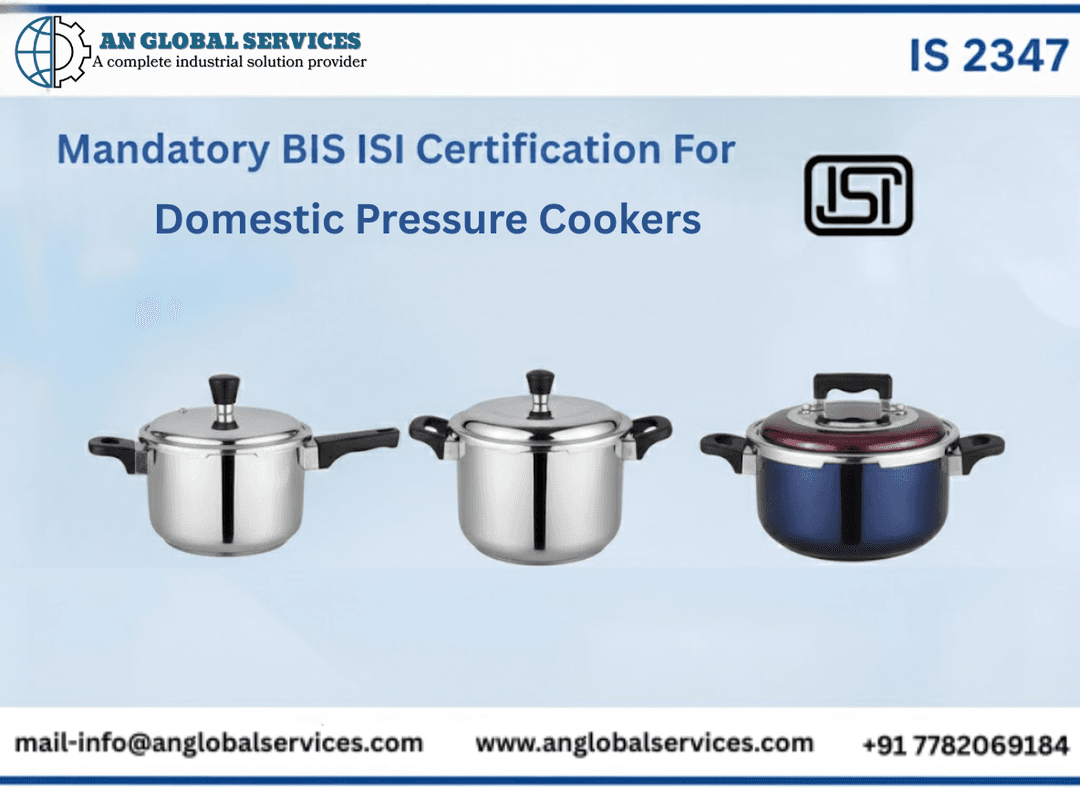
BIS ISI Certification for Domestic Pressure Cookers – IS 2347
BIS ISI certification is mandatory for domestic pressure cookers in India as per Indian Standard IS 2347:2017. In today’s competitive Indian market, it is difficult to sell or sustain products without meeting prescribed quality and safety standards. A valid BIS license is essential for manufacturers and importers to legally manufacture, import, and sell domestic pressure cookers in the Indian market.
IS 2347:2017 specifies detailed requirements related to material quality, construction, capacity, and safety mechanisms of domestic pressure cookers. Certification ensures that products are safe for household use and do not pose risks related to excessive pressure, material failure, or food contamination.
BIS ISI Mark certification improves market acceptance, builds consumer trust, and ensures compliance with statutory regulations for domestic pressure cookers across India.
IS 2347:2017 – Key Quality & Safety Requirements for Domestic Pressure Cookers
- (i) Nominal capacity ranging from 1 litre to 22 litres
- (ii) Capacity marking only in full or half-litre units
- (iii) Use of food-grade materials for all contact components
- (iv) Resistance to pressure, heat, and repeated cooking cycles
- (v) Safety performance of pressure regulating and release devices
- (vi) Mechanical strength of body, lid, and locking mechanism
- (vii) Gasket quality and sealing performance
- (viii) Proper marking, labeling, and product information
Overview of ISI Mark Certification for Domestic Pressure Cookers
Domestic pressure cookers are covered under IS 2347:2017, which defines the construction, material specifications, and safety requirements for pressure cookers used in households. The standard applies to cookers manufactured from aluminium alloys, stainless steel, or other approved materials suitable for domestic cooking applications.
All components that come into contact with food or steam, such as the vessel, lid, gasket, pressure regulating device, and internal accessories, must not affect the colour, taste, or aroma of food and must retain their performance and safety throughout the product’s lifespan.
The construction of the domestic pressure cooker must allow safe handling, reliable performance, and long service life. The vessel must not distort under normal operating conditions, and the body and lid should be free from surface defects such as wrinkles, scratches, or cracks.
Process Required for BIS ISI Mark Certification for Domestic Pressure Cookers (IS 2347:2017)
To obtain the BIS ISI Mark for domestic pressure cookers under Indian Standard IS 2347:2017, manufacturers must comply with the BIS Product Certification Scheme (Scheme I). This certification ensures that domestic pressure cookers meet mandatory safety, material, and construction requirements before being manufactured, imported, or sold in the Indian market.
Estimated Timeline: The BIS ISI certification process for domestic pressure cookers generally takes around 30 days for Indian manufacturers and up to 180 days for foreign manufacturers, depending on factory readiness, inspection scheduling, and product testing requirements.
Step-by-Step Certification Process
- Application Submission: Submit the BIS application through the Manak Online portal by providing domestic pressure cooker details, applicable Indian Standard (IS 2347:2017), factory address, manufacturing process, and machinery details.
- Testing Readiness: Ensure availability of testing facilities as specified under IS 2347:2017, including checks for capacity, pressure safety, material quality, gasket performance, and overall construction.
- Factory Inspection: A BIS officer conducts an on-site inspection to verify manufacturing capability, quality control systems, in-house testing arrangements, and compliance with the Scheme of Inspection and Testing (SIT).
- Sample Drawing and Testing: Pressure cooker samples are drawn during inspection and tested in BIS-recognized laboratories as per IS 2347:2017 requirements.
- Grant of BIS License: Upon successful inspection and satisfactory test results, BIS grants the Certification Marks License (CM/L), authorizing the use of the ISI Mark on domestic pressure cookers.
Requirements to Obtain BIS ISI License for Domestic Pressure Cookers (IS 2347)
- Compliance of domestic pressure cookers with all safety, material, and construction requirements specified under IS 2347:2017.
- Availability of appropriate testing facilities for pressure resistance, safety valve performance, gasket sealing, and capacity verification.
- Appointment of qualified quality control personnel to monitor production consistency and product safety.
- Strict adherence to the Scheme of Inspection and Testing (SIT) and BIS ISI certification guidelines applicable to domestic pressure cookers.
To obtain BIS ISI certification for domestic pressure cookers under Product Certification Scheme-I, manufacturers are required to submit documents broadly classified into the following categories:
- Administrative Details: Business registration documents, factory address proof, GST registration, and applicable statutory approvals.
- Technical Details: Pressure cooker specifications, material composition, nominal capacity range, safety devices, and construction details as per IS 2347:2017.
- Quality Control Personnel Details: Qualification, experience, and responsibilities of personnel handling quality assurance.
- Commercial Details: Brand name, trademark ownership (if applicable), and authorization letters.
Cost of BIS ISI Certification for Domestic Pressure Cookers (IS 2347)
The following are indicative government and related charges involved in obtaining BIS ISI certification for domestic pressure cookers under Product Certification Scheme-I. All statutory fees are payable directly to the Bureau of Indian Standards (BIS).
| S. No. | Particular | Amount (INR) | Remarks |
|---|---|---|---|
| 1 | Application Fee | ₹1,000 | Payable to BIS |
| 2 | Inspection / Audit Fee | ₹7,000 | Payable to BIS |
| 3 | Product Testing Fee | As applicable | Depends on model & laboratory |
| 4 | Marking Fee | As per actual | Based on BIS fee structure |
Important Note: Product testing as per IS 2347:2017 is a crucial part of the BIS certification process. BIS may conduct a factory pre-assessment to evaluate readiness prior to inspection. Charges mentioned above are indicative and may vary depending on cooker type, capacity group, and testing scope.
Benefits of Getting ISI Mark Certification for Domestic Pressure Cookers (IS 2347:2017)
Obtaining the ISI Mark for domestic pressure cookers under Indian Standard IS 2347:2017 provides significant legal, commercial, and safety-related advantages. ISI certification confirms that pressure cookers comply with prescribed Indian standards for material quality, construction, and operational safety, making them legally approved for manufacture, import, and sale in the Indian market.
1. Mandatory Legal Compliance
Domestic pressure cookers are notified products in India, and ISI Mark certification under IS 2347:2017 is mandatory. Manufacturers and importers can legally sell certified pressure cookers, while non-compliant products may face penalties, seizure, or prohibition from sale.
2. Wider Market Acceptance
ISI-certified domestic pressure cookers are widely accepted by retail chains, distributors, e-commerce platforms, and institutional buyers. Certification enables smoother market entry and nationwide product distribution.
3. Assured Safety and Food-Grade Quality
ISI certification ensures that pressure cookers meet strict safety requirements related to pressure regulation, gasket performance, material composition, and construction. Certified products reduce the risk of accidents and ensure food safety during cooking.
4. Enhanced Brand Credibility and Consumer Trust
Displaying the ISI Mark on domestic pressure cookers builds consumer confidence and reinforces brand credibility. Certified products are perceived as reliable, safe, and compliant with national quality standards.
5. Competitive Advantage and Business Growth
ISI-certified pressure cookers stand out in a competitive Indian market. Certification supports premium positioning, eligibility for government and institutional procurement, and long-term business growth.
Frequently Asked Questions (FAQs) – BIS ISI Certification for Domestic Pressure Cookers (IS 2347:2017)
1. Is BIS ISI certification mandatory for domestic pressure cookers in India?
Yes. Domestic pressure cookers must comply with Indian Standard IS 2347:2017. BIS ISI Mark certification is mandatory for manufacturers and importers before selling or distributing pressure cookers in the Indian market.
2. Which Indian Standard applies to domestic pressure cookers?
Domestic pressure cookers are governed by Indian Standard IS 2347:2017. This standard specifies requirements related to capacity, materials, construction, safety devices, and testing methods.
3. What is the validity of the BIS ISI license for pressure cookers?
The BIS license for domestic pressure cookers is usually granted for one year initially and can be renewed periodically, subject to ongoing compliance and payment of applicable marking fees.
5. How long does the BIS ISI certification process take?
The BIS ISI certification process typically takes around 30 days for Indian manufacturers and up to 180 days for foreign manufacturers, depending on documentation, product testing, and factory inspection timelines.
6. What happens if non-ISI certified pressure cookers are sold in India?
Selling non-ISI certified domestic pressure cookers in India may result in penalties, product seizure, cancellation of import clearance, and legal action under the Bureau of Indian Standards Act, 2016.
7. What tests are conducted under IS 2347:2017?
Testing under IS 2347:2017 includes checks for pressure resistance, safety valve and fusible plug performance, gasket sealing, material quality, capacity verification, and overall construction safety.

