UPCOMING QCO ON TEXTILE GOODS BY MINISTRY OF TEXTILE


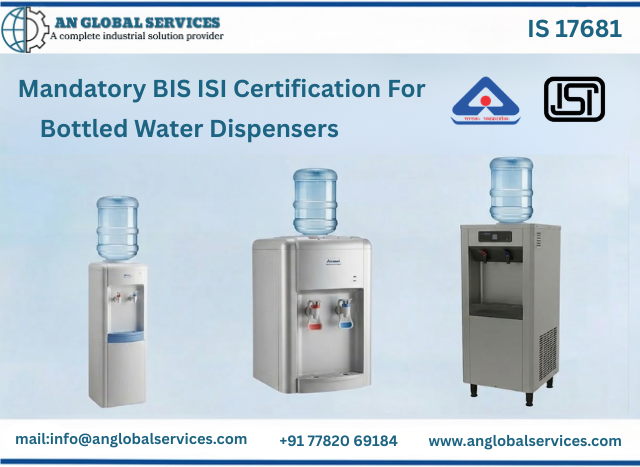
BIS ISI Certification for Bottled Water Dispensers IS 17681:2022
Bottled water dispensers are commonly used appliances in homes, offices, commercial establishments, and public spaces to provide easy access to safe drinking water. These systems are designed to support large water bottles and dispense water efficiently, often with hot and cold temperature options.
Indian Standard IS 17681:2022 specifies the safety, hygiene, construction, and performance requirements for bottled water dispensers. The standard ensures that the materials used are suitable for potable water contact and that the appliance maintains proper temperature control and operational reliability.
BIS ISI Mark Certification under IS 17681:2022 ensures that bottled water dispensers comply with Indian safety and quality standards. Manufacturers must obtain a BIS license to affix the ISI mark before manufacturing, importing, or selling these products in the Indian market.
IS 17681:2022 – Key Technical Requirements for Bottled Water Dispensers
- (i) Hygiene and safety requirements for potable water dispensing
- (ii) Use of food-grade materials suitable for drinking water contact
- (iii) Temperature control systems for hot and cold water dispensing
- (iv) Structural stability and leak-proof construction
- (v) Electrical safety and insulation protection
- (vi) Performance requirements for consistent water flow and operation
- (vii) Resistance to corrosion and environmental conditions
- (viii) Marking, labeling, and product identification requirements
Overview of ISI Mark Certification for Bottled Water Dispensers
Bottled water dispensers play a crucial role in ensuring access to clean drinking water in various environments. IS 17681:2022 defines essential requirements to ensure that these appliances maintain hygiene, safety, and performance during regular use.
The standard focuses on safe material selection, proper temperature control mechanisms, and reliable dispensing systems. It ensures that water quality is not affected during storage and dispensing, thereby protecting consumer health.
BIS ISI certification under the Product Certification Scheme (Scheme I) verifies that bottled water dispensers meet all applicable requirements. Manufacturers must demonstrate adequate manufacturing infrastructure, quality control systems, and testing capabilities before BIS grants the certification license.
Process Required for BIS ISI Mark Certification for Bottled Water Dispensers (IS 17681:2022)
To obtain BIS ISI Mark Certification for bottled water dispensers under IS 17681:2022, manufacturers must follow the BIS Product Certification Scheme (Scheme I). This process ensures that the product complies with safety, hygiene, and performance requirements before it is marketed in India.
Estimated Timeline: The BIS ISI certification process generally takes around 30 to 45 days depending on inspection scheduling, product testing, and document verification.
Step-by-Step Certification Process
- Application Submission: The manufacturer submits the BIS application through the Manak Online portal with product details, applicable standard (IS 17681:2022), and factory information.
- Product Testing Preparation: The manufacturer must ensure testing arrangements for hygiene, temperature control, electrical safety, and performance parameters.
- Factory Inspection: BIS officials inspect the manufacturing unit to verify production processes, quality systems, and testing facilities.
- Sample Testing: Product samples are tested in BIS-recognized laboratories as per IS 17681:2022 requirements.
- Grant of BIS License: After successful compliance, BIS grants the Certification Marks License (CM/L), allowing the use of the ISI mark on bottled water dispensers.
Requirements to Obtain BIS License for Bottled Water Dispensers (IS 17681:2022)
- Compliance of bottled water dispensers with hygiene, safety, and performance requirements specified under Indian Standard IS 17681:2022.
- Availability of appropriate testing facilities for parameters such as temperature control, electrical safety, material safety for potable water contact, and operational performance.
- Appointment of qualified quality control personnel responsible for monitoring manufacturing processes and ensuring compliance with BIS requirements.
- Implementation of the Scheme of Inspection and Testing (SIT) prescribed by BIS to maintain consistent product quality and safety.
To obtain BIS ISI Mark Certification for bottled water dispensers under Product Certification Scheme-I, manufacturers must submit documents categorized into the following groups:
- Administrative Documents: Business registration, factory address proof, GST registration, and other statutory approvals.
- Technical Details: Product specifications including storage capacity, temperature control mechanism (hot and cold), material used for water contact parts, and electrical components as per IS 17681:2022.
- Quality Control Personnel Details: Qualification and experience details of personnel responsible for inspection, testing, and quality assurance.
- Commercial Details: Brand name, trademark details (if applicable), and product authorization documents.
Cost of BIS ISI Certification for Bottled Water Dispensers (IS 17681:2022)
The following are indicative government and related charges involved in obtaining BIS ISI Certification for bottled water dispensers under Product Certification Scheme-I. These charges are payable directly to the Bureau of Indian Standards (BIS).
| S. No. | Particular | Amount (INR) | Remarks |
|---|---|---|---|
| 1 | Application Fee | ₹1,000 | Payable to BIS |
| 2 | Inspection / Audit Fee | ₹7,000 | Payable to BIS |
| 3 | Product Testing Fee | As applicable | Depends on dispenser type and laboratory testing |
| 4 | Marking Fee | As per actual | Based on BIS fee structure |
Important Note: Product testing as per IS 17681:2022 is a critical stage in the BIS ISI certification process. BIS evaluates product safety, hygiene compliance, and manufacturing capability before granting the certification license.
Benefits of Getting ISI Mark Certification for Bottled Water Dispensers (IS 17681:2022)
Obtaining ISI Mark Certification for bottled water dispensers ensures compliance with Indian safety and hygiene standards. Certification enhances product reliability, consumer trust, and market acceptance.
1. Ensures Safe Drinking Water Handling
Certification ensures materials and design are safe for potable water storage and dispensing.
2. Compliance with Hygiene Standards
ISI certification ensures the product meets hygiene and sanitation requirements as per IS 17681:2022.
3. Reliable Performance
Certified dispensers ensure consistent water flow and proper temperature control for hot and cold water.
4. Increased Brand Trust
The ISI mark assures customers of product quality, safety, and reliability.
5. Competitive Advantage in the Market
ISI-certified products are preferred by consumers, offices, and institutions.
Frequently Asked Questions (FAQs) – BIS ISI Certification for Bottled Water Dispensers (IS 17681:2022)
1. Which standard applies to bottled water dispensers in India?
Bottled water dispensers are covered under Indian Standard IS 17681:2022.
2. Is BIS ISI certification mandatory for bottled water dispensers?
Yes, manufacturers must comply with IS 17681:2022 and obtain BIS certification to use the ISI mark and sell the product in India.
3. What features are covered under this standard?
The standard covers hygiene, temperature control, material safety, structural integrity, and performance requirements.
4. How long does BIS ISI certification take?
The BIS ISI certification process typically takes around 30 to 45 days depending on inspection and testing timelines.
5. What tests are conducted for bottled water dispensers?
Tests include electrical safety checks, temperature performance testing, material safety verification, and functional performance tests.