UPCOMING QCO ON TEXTILE GOODS BY MINISTRY OF TEXTILE


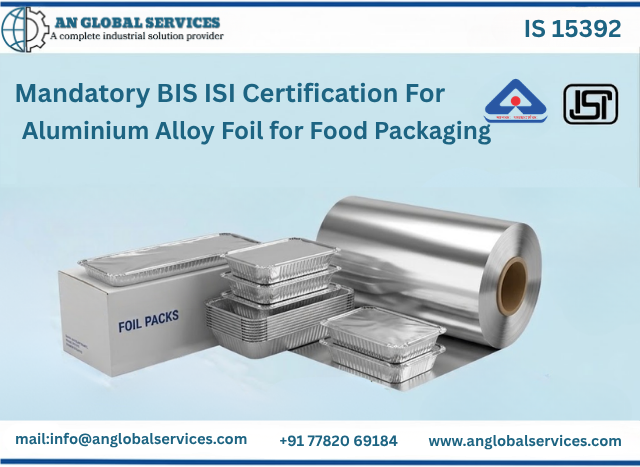
BIS ISI Certification for Aluminium and Aluminium Alloy Foil for Food Packaging IS 15392:2003
Aluminium and aluminium alloy foils are widely used in food packaging where safety, hygiene, and product protection are important. These foils help protect food from moisture, light, contamination, and external conditions, ensuring longer shelf life and maintaining food quality.
Indian Standard IS 15392:2003 specifies the requirements for aluminium and aluminium alloy bare foil used in food packaging. The standard defines thickness range, material composition, surface condition, and quality parameters to ensure safe and reliable use in food packaging applications.
BIS ISI Mark Certification is required for notified products in India. Manufacturers must ensure that aluminium foil complies with IS 15392:2003 before manufacturing, selling, or distributing in the Indian market.
Key Technical Requirements for Aluminium Foil for Food Packaging (IS 15392:2003)
- (i) Thickness range from 11 µm to 75 µm
- (ii) Available in dry annealed and slick annealed surface condition
- (iii) Uniform thickness and proper dimensional accuracy
- (iv) Free from pin holes, cracks, and surface defects
- (v) Supplied in fully annealed ‘O’ temper condition
- (vi) Material must meet chemical composition as per IS 737 grades
- (vii) Supplied in pre-lubricated condition unless specified otherwise
- (viii) Suitable for safe food packaging applications
Overview of ISI Mark Certification for Aluminium Foil for Food Packaging
Aluminium foil used in food packaging plays an important role in maintaining food safety and quality. It protects food products from moisture, air, light, and contamination during storage and transportation.
IS 15392:2003 defines requirements such as thickness, material quality, surface condition, and performance parameters. Compliance with this standard ensures that the foil is suitable for food contact and meets safety requirements.
BIS ISI certification confirms that manufacturers follow proper production processes, maintain quality control, and meet all required standards before using the ISI mark on aluminium foil products.
Process Required for BIS ISI Mark Certification for Aluminium Foil (IS 15392:2003)
To obtain BIS ISI certification for aluminium and aluminium alloy foil used in food packaging, manufacturers must follow the BIS Product Certification Scheme. This ensures that the product meets quality and safety requirements before being introduced into the market.
Estimated Timeline: BIS ISI certification for aluminium foil generally takes around 30–45 days for Indian manufacturers
Step-by-Step Certification Process
- Application Submission: Apply through the BIS Manak Online portal with product details and IS 15392:2003 reference.
- Testing Readiness: Ensure testing facilities for thickness, pin hole count, tensile properties, and dimensions.
- Factory Inspection: BIS officials inspect the manufacturing unit, quality control system, and testing setup.
- Sample Testing: Product samples are tested in BIS-approved laboratories to verify compliance with IS 15392:2003.
- Grant of BIS License: After successful verification, BIS grants the license to use the ISI mark.
Requirements to Obtain BIS ISI License for Aluminium Foil for Food Packaging (IS 15392:2003)
- Compliance of aluminium foil with IS 15392:2003 requirements including thickness, material composition, and surface condition.
- Availability of testing facilities for pin hole count, thickness measurement, tensile properties, and dimensional checks.
- Appointment of qualified quality control personnel responsible for inspection and testing.
- Implementation of the Scheme of Inspection and Testing (SIT) as prescribed by BIS.
To obtain BIS ISI certification for aluminium foil under Product Certification Scheme, manufacturers are required to submit documents categorized as follows:
- Administrative Details: Business registration, factory address proof, GST registration, and statutory approvals.
- Technical Details: Foil thickness range, surface condition, material grade, and test parameters as per IS 15392:2003.
- Quality Control Personnel Details: Qualification and experience of inspection and testing staff.
- Commercial Details: Brand name, trademark (if applicable), and authorization documents.
Cost of BIS ISI Certification for Aluminium Foil (IS 15392:2003)
The following are indicative statutory charges involved in obtaining BIS ISI certification under the Product Certification Scheme.
| S. No. | Particular | Amount (INR) | Remarks |
|---|---|---|---|
| 1 | Application Fee | ₹1,000 | Payable to BIS |
| 2 | Inspection / Audit Fee | ₹7,000 | Payable to BIS |
| 3 | Product Testing Fee | As applicable | Depends on laboratory testing |
| 4 | Marking Fee | As per actual | As per BIS norms |
Note: Fees are indicative and subject to revision by BIS. Please verify from the official BIS portal.
Benefits of Getting ISI Mark Certification for Aluminium Foil (IS 15392:2003)
BIS ISI certification ensures that aluminium foil used in food packaging meets safety, hygiene, and quality requirements.
1. Ensures Food Safety
Protects food from contamination, moisture, and external factors.
2. Maintains Product Quality
Helps in preserving freshness and extending shelf life of food products.
3. Consistent Product Standards
Ensures uniform thickness, strength, and surface quality.
4. Builds Market Trust
ISI mark increases confidence among buyers and food manufacturers.
5. Regulatory Compliance
Helps meet Indian regulatory requirements for food packaging materials.
Frequently Asked Questions (FAQs) – BIS ISI Certification for Aluminium Foil (IS 15392:2003)
1. What is IS 15392:2003?
It is the Indian Standard that specifies requirements for aluminium and aluminium alloy bare foil used in food packaging.
2. What thickness is covered under this standard?
The standard covers foil thickness from 11 µm to 75 µm.
3. What tests are conducted for aluminium foil?
Tests include pin hole count, thickness, tensile properties, dimensions, and surface quality checks.
4. How long does certification take?
The process generally takes around 30–45 days depending on testing and inspection.
5. Can uncertified foil be sold in India?
Products notified under BIS certification cannot be manufactured or sold without approval.