UPCOMING QCO ON TEXTILE GOODS BY MINISTRY OF TEXTILE


NABL Certification & Accreditation Services for Laboratories
INTRODUCTION
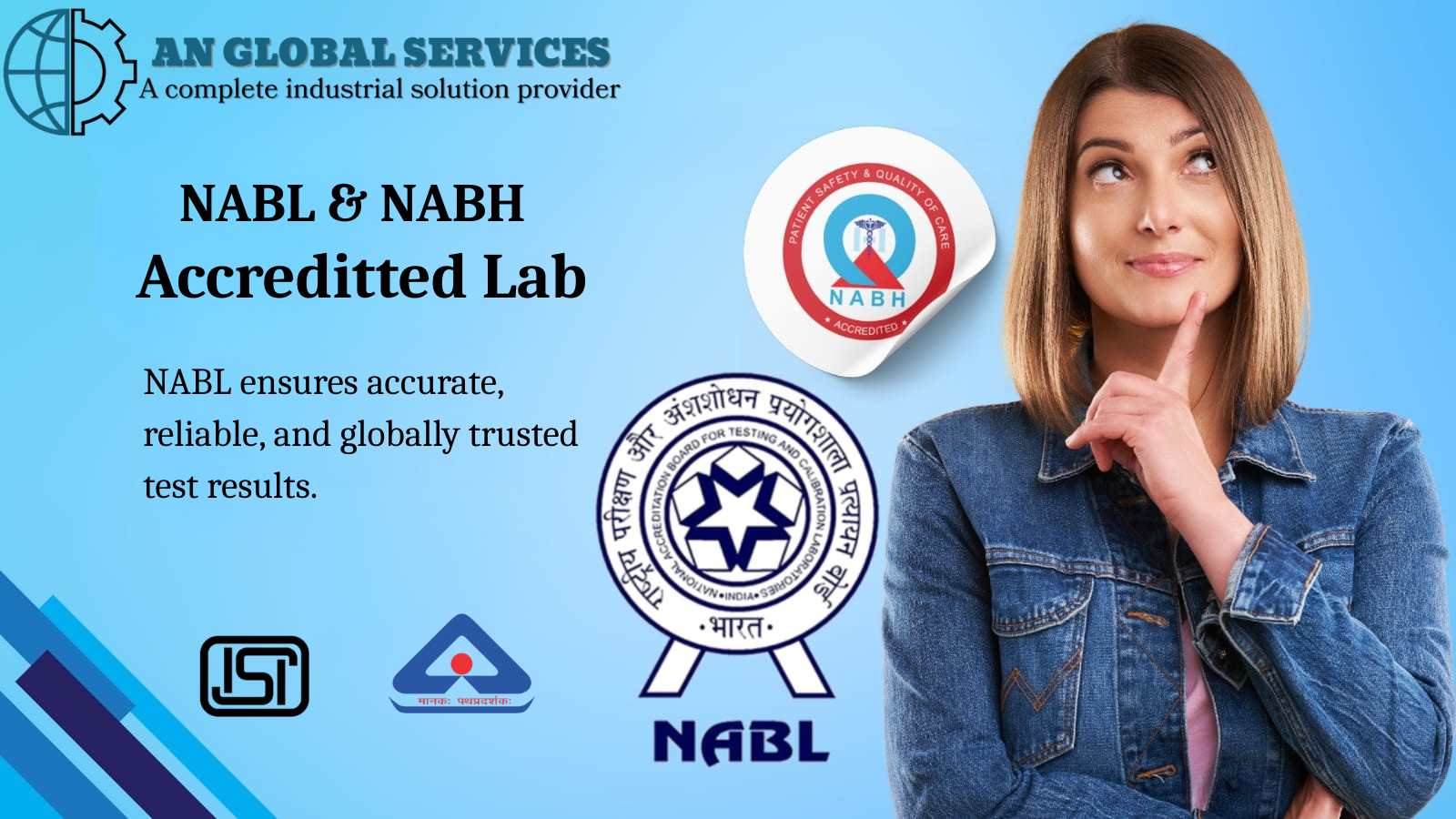
In simple terms, NABL accreditation is the gold standard for testing, calibration, and medical laboratories in India. It is a formal recognition that a laboratory is technically competent to produce accurate, reliable, and internationally acceptable test or calibration results. While the term “certification” is commonly used, NABL technically grants accreditation, which focuses on a laboratory’s technical capability rather than just its management processes.
NABL stands for the National Accreditation Board for Testing and Calibration Laboratories. It is an autonomous body under the Quality Council of India (QCI) and operates with the objective of assessing laboratories against internationally recognized standards such as ISO/IEC 17025 for testing and calibration laboratories and ISO 15189 for medical laboratories. Unlike ISO 9001, which focuses on quality management systems, NABL accreditation evaluates technical competence, including equipment, trained personnel, validated methods, and result accuracy.
NABL-accredited laboratories enjoy strong national and international recognition. NABL is a signatory to the ILAC Mutual Recognition Arrangement (MRA) and a partner of APLAC, enabling test reports issued by NABL-accredited laboratories to be accepted across multiple countries. This international recognition helps eliminate technical barriers to trade and enhances the credibility of laboratory results for regulatory, commercial, and legal purposes.
NABL accreditation is mandatory or strongly recommended by several Indian regulatory authorities and government departments, including FSSAI, CDSCO, BIS, and other statutory bodies. It is applicable to a wide range of laboratories such as medical and clinical laboratories, product testing laboratories for food, chemicals, textiles, electronics, and water, as well as calibration laboratories handling instruments like thermometers, pressure gauges, weighing balances, and dimensional measuring equipment.
How to Get NABL Accreditation
Obtaining NABL accreditation is a structured and rigorous process that goes beyond simple documentation. It requires laboratories to implement and demonstrate an internationally accepted quality management system. When properly executed, NABL accreditation significantly enhances a laboratory’s technical credibility, regulatory acceptance, and global recognition.
Phase 1: Preparation (Internal Readiness)
- Obtain and study the applicable standard such as ISO/IEC 17025 for testing and calibration laboratories or ISO 15189 for medical laboratories.
- Develop mandatory documentation including the Quality Manual, Standard Operating Procedures (SOPs), and work instructions.
- Train technical and quality personnel to ensure competence in testing methods and understanding of the quality system.
- Participate in at least one Proficiency Testing (PT) or External Quality Assurance Scheme (EQAS) relevant to the scope.
- Conduct an internal audit and Management Review Meeting (MRM) to identify and close gaps prior to application.
Phase 2: Application Process
- Create an account on the official NABL web portal.
- Submit the relevant NABL application form (NABL 151 / 152 / 153) along with the defined Scope of Accreditation.
- Upload required documents such as legal entity proof, Quality Manual, SOPs, and PT/EQAS participation records.
- Pay the applicable application fee based on laboratory size and scope.
Phase 3: Assessment Stages
- Adequacy Audit: Review of submitted documents to verify compliance with ISO requirements.
- Pre-Assessment (Optional): A preliminary on-site audit to identify major non-conformities before final assessment.
- Final On-Site Assessment: NABL assessors evaluate technical competence, witness tests, verify equipment calibration, and review records.
Phase 4: Grant of Accreditation
- Closure of non-conformities (NCs) identified during assessment within the stipulated timeframe (typically 30–60 days).
- Review of compliance evidence by the NABL Accreditation Committee.
- Issuance of NABL Accreditation Certificate with QR code and defined scope, generally valid for two years.
| Cost Category | Small Laboratory | Medium / Large Laboratory |
|---|---|---|
| Application Fee | ₹5,000 – ₹15,000 | ₹25,000 – ₹50,000+ |
| Assessment Charges | ~₹15,000 per assessor per day | ~₹15,000 per assessor per day |
| Annual Fee | ₹10,000 – ₹20,000 | ₹30,000 – ₹1,00,000 |
Important Note: Timelines and costs may vary depending on laboratory size, number of test parameters, assessor availability, and readiness level. Professional guidance from experienced consultants such as AN Global Services can significantly reduce delays and non-conformities.
Documents and Process Required for NABL Accreditation
To obtain NABL accreditation in 2026, laboratories must meet two critical requirements: establishment of a robust document management system and successful completion of the formal NABL accreditation process. These requirements ensure compliance with international standards such as ISO/IEC 17025 for testing and calibration laboratories or ISO 15189 for medical laboratories.
1. Mandatory Documents & Records
A. Strategic & Quality Documents
- Legal identity documents including company registration certificate, GST registration, and PAN.
- Quality Manual (Level 1) defining the laboratory’s quality policy and compliance with ISO clauses.
- Standard Operating Procedures (SOPs) and work instructions (Level 2 & 3) covering testing, calibration, sample handling, and administrative processes.
B. Technical Records (Evidence of Competence)
- Master equipment list detailing make, model, serial number, and unique identification number.
- Valid calibration certificates issued by NABL-accredited calibration laboratories.
- Staff competency records including qualifications, training records, experience details, and authorization letters for report signatories.
- Proficiency Testing (PT) or EQAS participation reports demonstrating acceptable performance.
- Internal audit reports conducted within the last 12 months.
- Management Review Meeting (MRM) minutes showing top management involvement and review of laboratory performance.
| Step | Stage | Description |
|---|---|---|
| 1 | Registration | Create a user account on the NABL web portal to obtain login credentials. |
| 2 | Application Submission | Submit the relevant NABL application form with defined Scope of Accreditation and upload all required documents. |
| 3 | Adequacy Audit | Review of submitted documents by a NABL Lead Assessor to identify gaps against ISO requirements. |
| 4 | Pre-Assessment (Optional) | A preliminary assessment to evaluate readiness before the final audit. |
| 5 | Final Assessment | On-site or remote evaluation by technical assessors, including witnessing of tests and verification of records. |
| 6 | Closure of NCs | Submission of corrective actions and evidence to close non-conformities within the stipulated timeframe. |
| 7 | Grant of Accreditation | Final review by the Accreditation Committee and issuance of NABL certificate with approved scope. |
Get Expert Help for NABL Certification & Accreditation
Avoid delays, reduce non-conformities, and achieve NABL accreditation faster with expert consultancy from AN Global Services.
Request Free ConsultationNABL Certification – Frequently Asked Questions
Is NABL certification mandatory?
NABL accreditation is mandatory or strongly recommended for laboratories regulated by authorities such as FSSAI, CDSCO, BIS, and other government agencies in India.
What is the difference between NABL certification and accreditation?
Technically, NABL grants accreditation, not certification. However, the term “NABL certificate” is commonly used to refer to the accreditation certificate issued after successful assessment.
How long does NABL accreditation take?
The NABL accreditation process typically takes 4 to 6 months depending on laboratory readiness, scope, and assessor availability.
How long is the NABL certificate valid?
NABL accreditation is generally valid for two years, subject to surveillance and compliance requirements.